
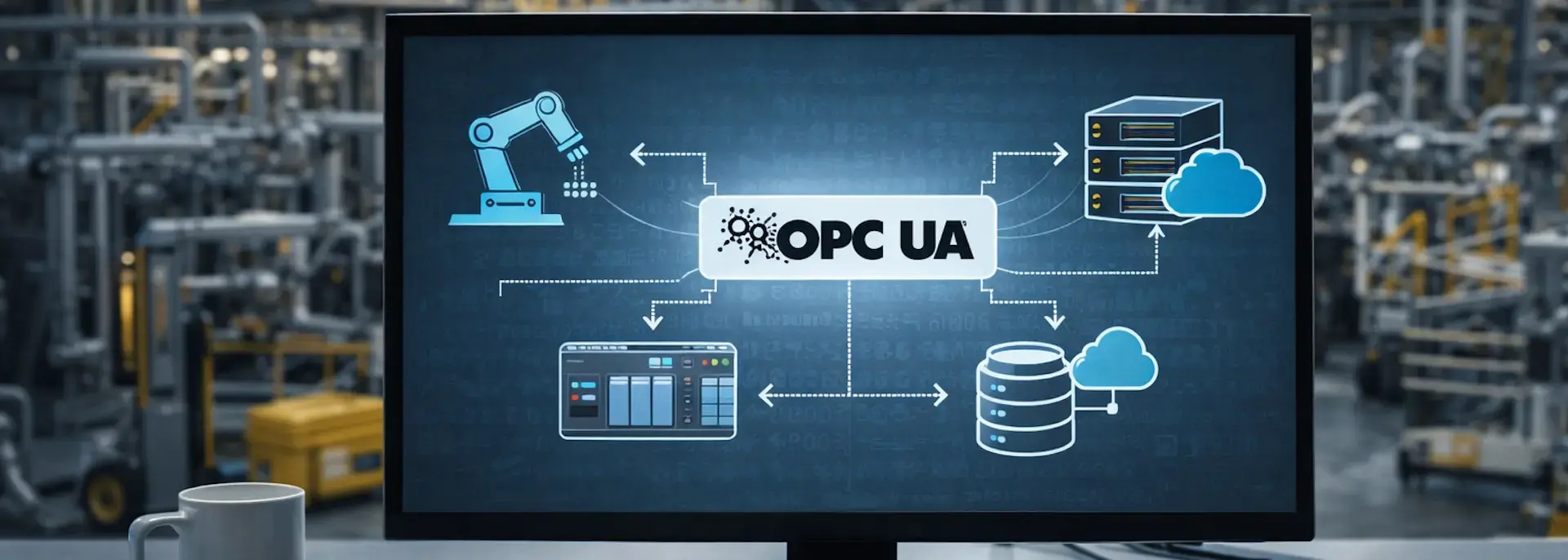
What Is OPC UA? How Does the OPC UA Protocol Work?
OPC UA is a platform-independent industrial communication standard designed for secure and reliable data exchange between devices, systems, and enterprise applications. When asking what is opc ua, it refers to a service-oriented architecture that enables seamless interoperability across different vendors and platforms.
Unlike legacy communication standards, the opc ua protocol supports encrypted communication, authentication, and structured data modeling. This makes it ideal for Industry 4.0, smart factory environments, and scalable opc ua integration projects.
Because opc ua is hardware and operating system independent, it can run on embedded devices, PLCs, servers, and cloud platforms. Understanding how does opc ua work is essential for building secure and future-ready industrial automation systems.
What Is OPC UA? (OPC UA Definition and Meaning)
The opc ua definition describes a secure, platform-independent communication standard developed by the OPC Foundation for industrial automation systems. When asking what is opc ua, it refers to a unified architecture that enables structured, reliable, and interoperable data exchange between devices and software platforms.
The term opc ua means more than simple data transfer. It represents a service-oriented framework that supports data modeling, encryption, authentication, and scalable opc ua integration across factory, enterprise, and cloud levels.
Unlike older technologies, opc-ua is not limited to Windows-based systems and can operate across multiple operating systems and hardware platforms. This flexibility makes the opc ua protocol a core technology in digital transformation and Industry 4.0 initiatives.
What Does OPC UA Mean in Industrial Automation?
In industrial automation, opc ua means a secure and standardized communication framework that enables seamless data exchange between machines, control systems, and enterprise applications. When organizations ask what is opc ua, they are typically referring to a unified architecture designed to ensure interoperability across multi-vendor environments.
The opc ua protocol allows devices such as PLCs, SCADA systems, MES platforms, and cloud services to communicate using structured data models rather than simple tag-based values. This supports advanced opc ua integration across production, quality, maintenance, and energy management systems.
Because opc-ua includes built-in security features such as encryption and authentication, it plays a critical role in protecting industrial networks while enabling scalable digital transformation strategies.
What Is the OPC UA Full Form?
The opc ua full form is Open Platform Communications Unified Architecture. This name reflects the evolution of the original OPC standard into a modern, platform-independent communication framework.
When defining what is opc ua, the term “Unified Architecture” highlights that the opc ua protocol consolidates multiple classic OPC specifications into a single, service-oriented architecture. Unlike earlier versions, opc-ua is not limited to Microsoft COM/DCOM technology and can operate across different operating systems and hardware platforms.
The “Open” aspect emphasizes vendor-neutral interoperability, enabling seamless opc ua integration between PLCs, SCADA systems, MES platforms, and cloud applications. As a result, opc ua means secure, scalable, and standardized communication for Industry 4.0 environments.
What Is the OPC UA Protocol and Why Is It Used?
The opc ua protocol is a platform-independent, service-oriented communication standard designed for secure and reliable industrial data exchange. When asking what is opc ua, it refers to a unified architecture that enables structured communication between devices, control systems, and enterprise applications.
The protocol is widely adopted because it supports secure authentication, encryption, and certificate-based communication by default. This makes opc-ua integration suitable for both local factory networks and cloud-connected architectures.
Another reason the opc ua protocol is used is its advanced information modeling capability. Instead of transmitting raw data only, opc ua can represent complex objects, relationships, and metadata. This allows scalable opc ua integration across SCADA, MES, ERP, and analytics platforms.
How Is the OPC UA Protocol Different from Classic OPC?
The opc ua protocol differs significantly from Classic OPC in terms of architecture, security, and platform independence. Classic OPC was based on Microsoft COM/DCOM technology, which limited deployment to Windows environments and created firewall and security challenges.
In contrast, opc ua is platform-independent and can run on Windows, Linux, embedded systems, and cloud platforms. This flexibility makes opc-ua integration more scalable and suitable for modern industrial architectures.
Security is another major difference. While Classic OPC relied heavily on network-level protection, the opc ua protocol includes built-in encryption, authentication, and certificate management. When explaining what is opc ua, it is important to emphasize that it provides a unified, secure, and future-ready communication framework for Industry 4.0 environments.
Which Industrial Systems Commonly Use the OPC UA Protocol?
The opc ua protocol is widely used across various industrial systems that require secure and standardized communication. PLCs, SCADA platforms, Distributed Control Systems (DCS), and Manufacturing Execution Systems (MES) commonly rely on opc ua integration to exchange structured production data.
Energy management systems, predictive maintenance platforms, and Industrial IoT applications also utilize opc-ua integration to connect field devices with enterprise and cloud environments. When explaining what is opc ua, it is important to highlight its ability to unify shop-floor and top-floor communication.
Because opc ua supports platform independence and advanced data modeling, it is frequently implemented in smart factories, automotive manufacturing, pharmaceuticals, and process industries where interoperability and cybersecurity are critical.
Understanding how does opc ua work in practice requires examining its client-server and publish-subscribe communication models. In a typical setup, an OPC UA server collects real-time data from PLCs, sensors, or control systems and exposes it in a structured information model.
An application using opc ua client software then connects securely to the server, browses available nodes, and reads or writes data based on access permissions. The opc ua protocol ensures encrypted communication and certificate-based authentication during this process.
In modern architectures, opc ua integration may also involve cloud platforms or edge gateways, enabling secure data flow beyond the factory floor. This practical flexibility makes opc-ua a core technology for Industry 4.0 and scalable digital transformation projects.
How Does OPC UA Work in Practice?
Understanding how does opc ua work in practice requires examining its client-server and publish-subscribe communication models. In a typical setup, an OPC UA server collects real-time data from PLCs, sensors, or control systems and exposes it in a structured information model.
An application using opc ua client software then connects securely to the server, browses available nodes, and reads or writes data based on access permissions. The opc ua protocol ensures encrypted communication and certificate-based authentication during this process.
In modern architectures, opc ua integration may also involve cloud platforms or edge gateways, enabling secure data flow beyond the factory floor. This practical flexibility makes opc-ua a core technology for Industry 4.0 and scalable digital transformation projects.
What Are the Core OPC UA Methods and Services?
The opc ua methods and services define how data is accessed, monitored, and managed within the opc ua protocol architecture. OPC UA is built on a service-oriented model where clients interact with servers through standardized service sets.
Core services include Discovery, Secure Channel establishment, Session management, Node browsing, Read/Write operations, and Subscription-based data monitoring. Using opc ua client software, applications can browse the server’s address space, access structured variables, and subscribe to real-time data changes.
In addition to data access, opc ua methods allow clients to execute server-side functions, enabling advanced control and object-oriented interaction. This structured and secure approach makes opc-ua integration highly scalable for complex industrial automation and enterprise-level systems.
How Is OPC UA Client Software Implemented in Industrial Systems?
OPC ua client software is implemented in industrial systems to securely connect to OPC UA servers and exchange structured data. In a typical architecture, the client application runs on SCADA systems, HMIs, industrial PCs, or cloud gateways and establishes a secure session using the opc ua protocol.
During implementation, security certificates are configured to enable encrypted communication and authentication. Once connected, the opc ua client software can browse the server’s address space, read and write variables, and subscribe to real-time data changes.
For scalable opc ua integration, client applications are often integrated with MES, ERP, analytics platforms, or edge computing solutions. This ensures seamless opc-ua integration across production, maintenance, and enterprise layers within Industry 4.0 environments.
What Types of OPC UA Software Are Available?
Various types of opc ua software are available to support different industrial requirements. These solutions generally fall into three main categories: OPC UA servers, OPC UA clients, and integrated gateway platforms.
Server-based opc ua software collects data from PLCs, controllers, or field devices and exposes structured information through the opc ua protocol. On the other hand, opc ua client software connects to servers to read, write, and monitor operational data within SCADA, MES, or analytics systems.
Additionally, gateway solutions enable advanced opc ua integration by bridging legacy protocols such as Modbus or Profinet into opc-ua environments. When evaluating opc ua software, compatibility, scalability, security features, and certification compliance should be carefully assessed.
What Are the Main Benefits of Using OPC UA in Industrial Systems?
OPC ua provides significant advantages for modern industrial automation systems. One of the main benefits of the opc ua protocol is built-in security, including encryption, authentication, and certificate-based access control. This ensures secure data exchange across local networks and cloud-connected infrastructures.
Another key advantage is platform independence. Unlike legacy solutions, opc-ua integration is not limited to specific operating systems, enabling flexible deployment across embedded devices, servers, and enterprise platforms.
Advanced data modeling is also a major benefit. Instead of transferring simple tag values, opc ua supports structured information models, improving interoperability and scalability. As a result, opc ua integration becomes more efficient in Industry 4.0 environments, supporting smart factory, analytics, and digital transformation initiatives.
What Should Be Considered When Choosing an OPC UA Software Solution?
When selecting an opc ua software solution, security capabilities should be evaluated first. The chosen platform must fully support the opc ua protocol, including encryption, certificate management, and role-based authentication to ensure secure communication.
Scalability and compatibility are also critical factors. A reliable solution should support seamless opc ua integration with PLCs, SCADA, MES, and cloud systems. Compatibility with existing infrastructure simplifies opc-ua integration and reduces deployment time.
Performance and data modeling capabilities should also be assessed. Advanced opc ua software should efficiently manage large address spaces and support complex opc ua methods for structured interaction.
Finally, vendor support, certification compliance, and long-term maintainability must be considered to ensure sustainable and future-ready industrial automation projects.